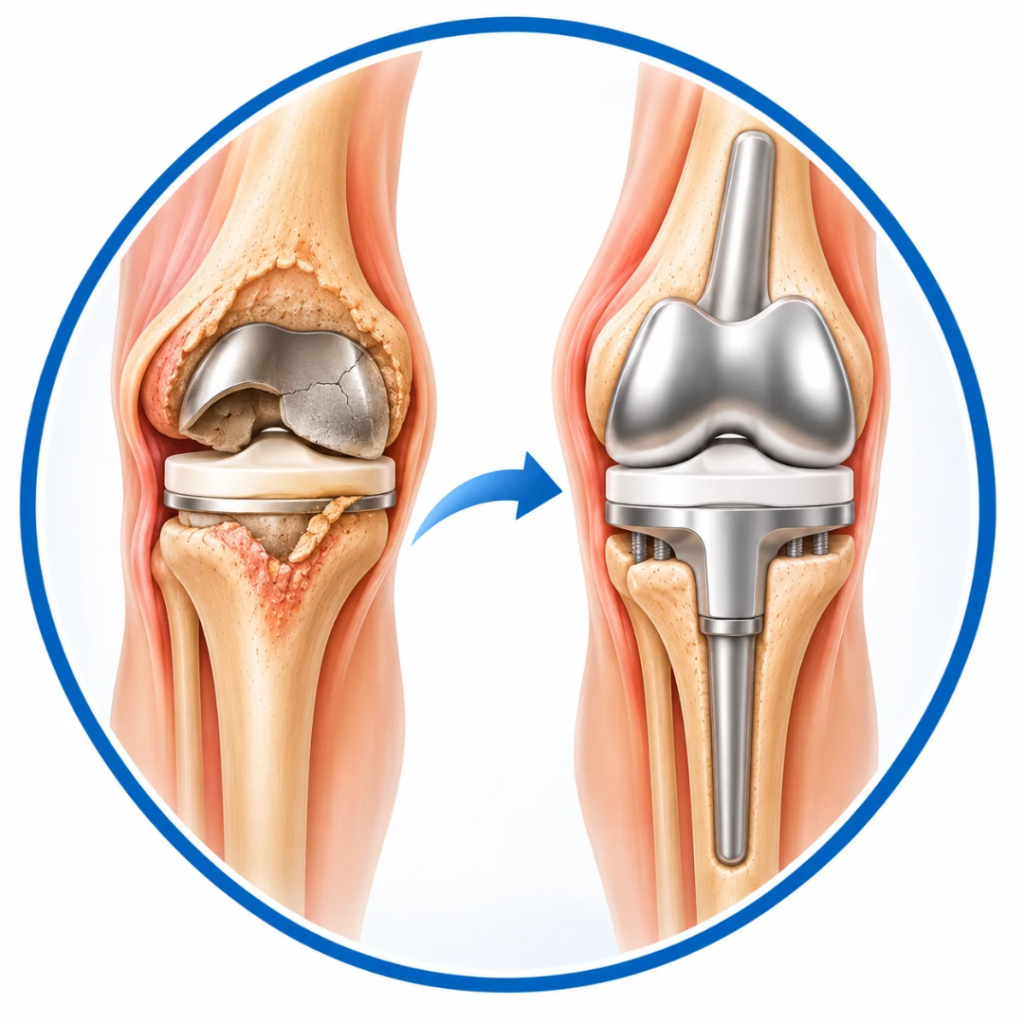
Total Knee Replacement is performed by an orthopedic surgeon under appropriate anesthesia. The procedure generally involves the following stages.
Before the Surgery
Before recommending knee replacement surgery, the orthopedic specialist will:
Review the patient’s medical history.
Evaluate knee pain and joint movement.
Perform a physical examination.
Review knee X-rays and other necessary investigations.
Assess general health and fitness for surgery.
Explain the procedure, possible risks and expected recovery.
Patients may also receive instructions regarding medications, fasting and preparation for anesthesia.
During the Surgery
The patient is given appropriate anesthesia before the procedure.
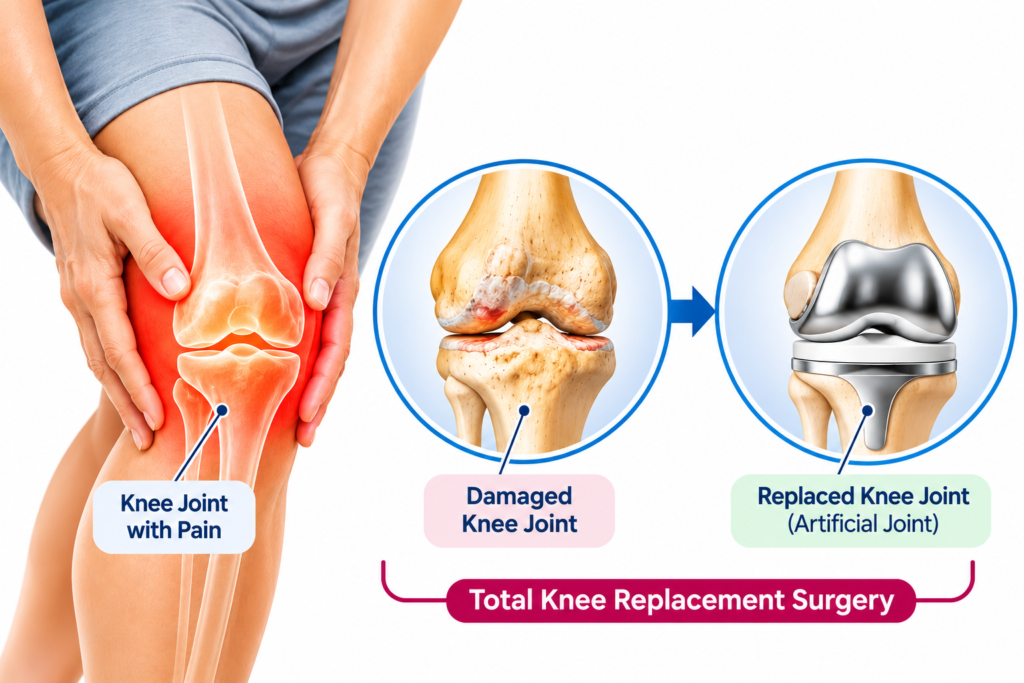
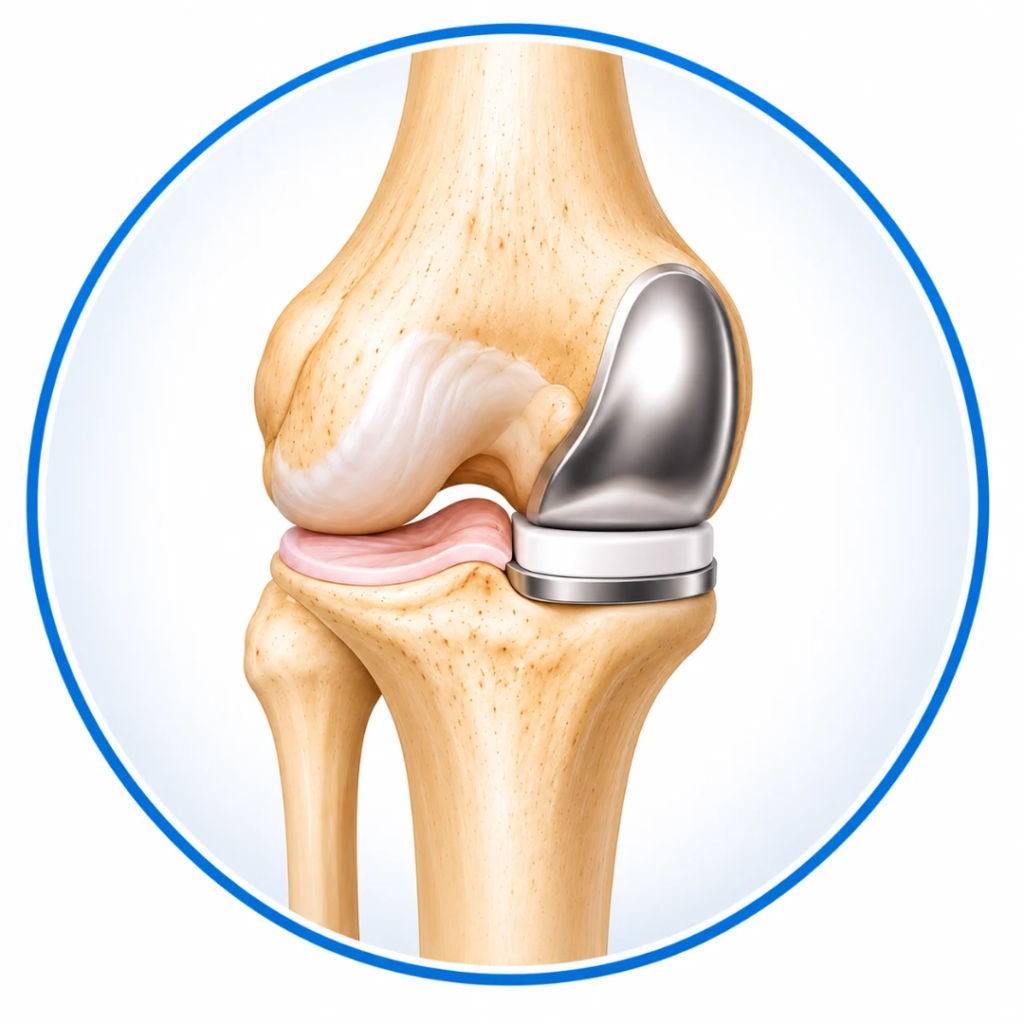
The surgeon makes an incision to access the knee joint. Damaged cartilage and a small amount of underlying bone are removed from the affected joint surfaces.
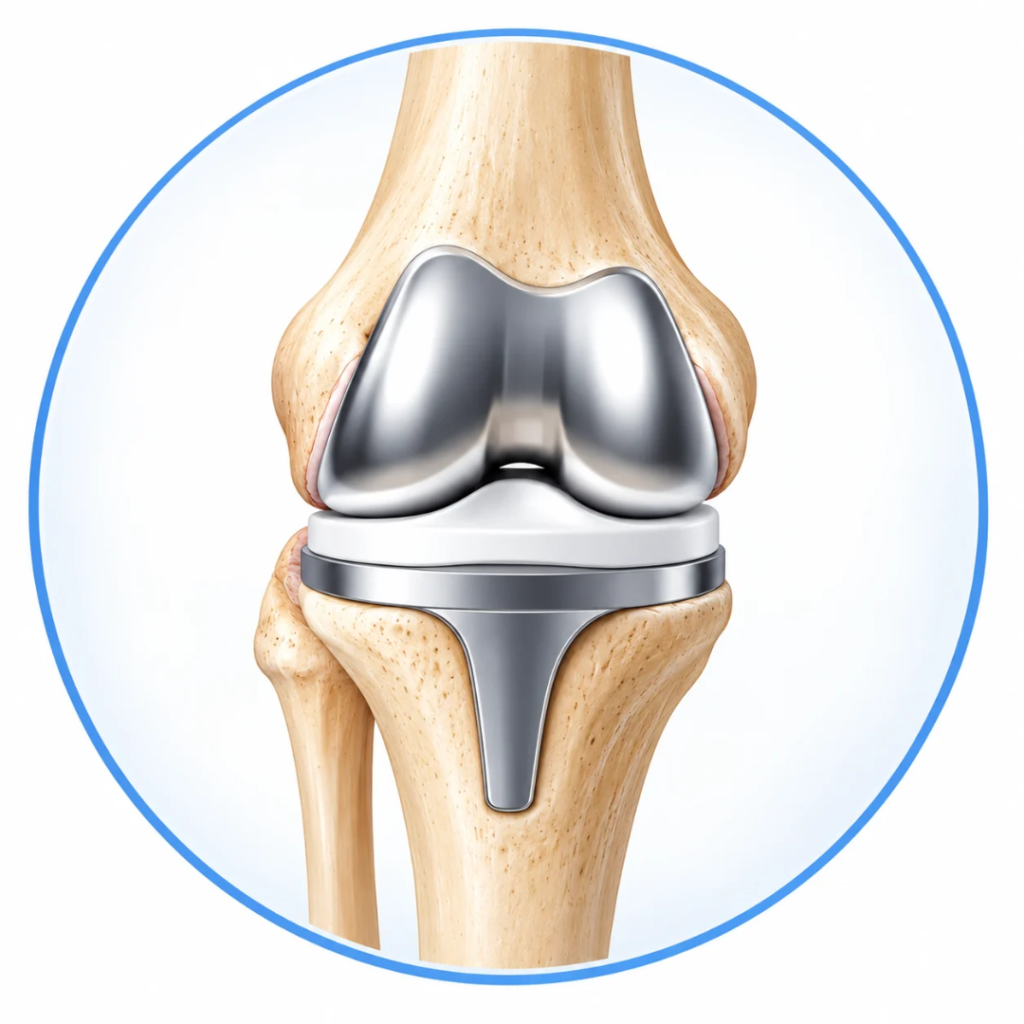
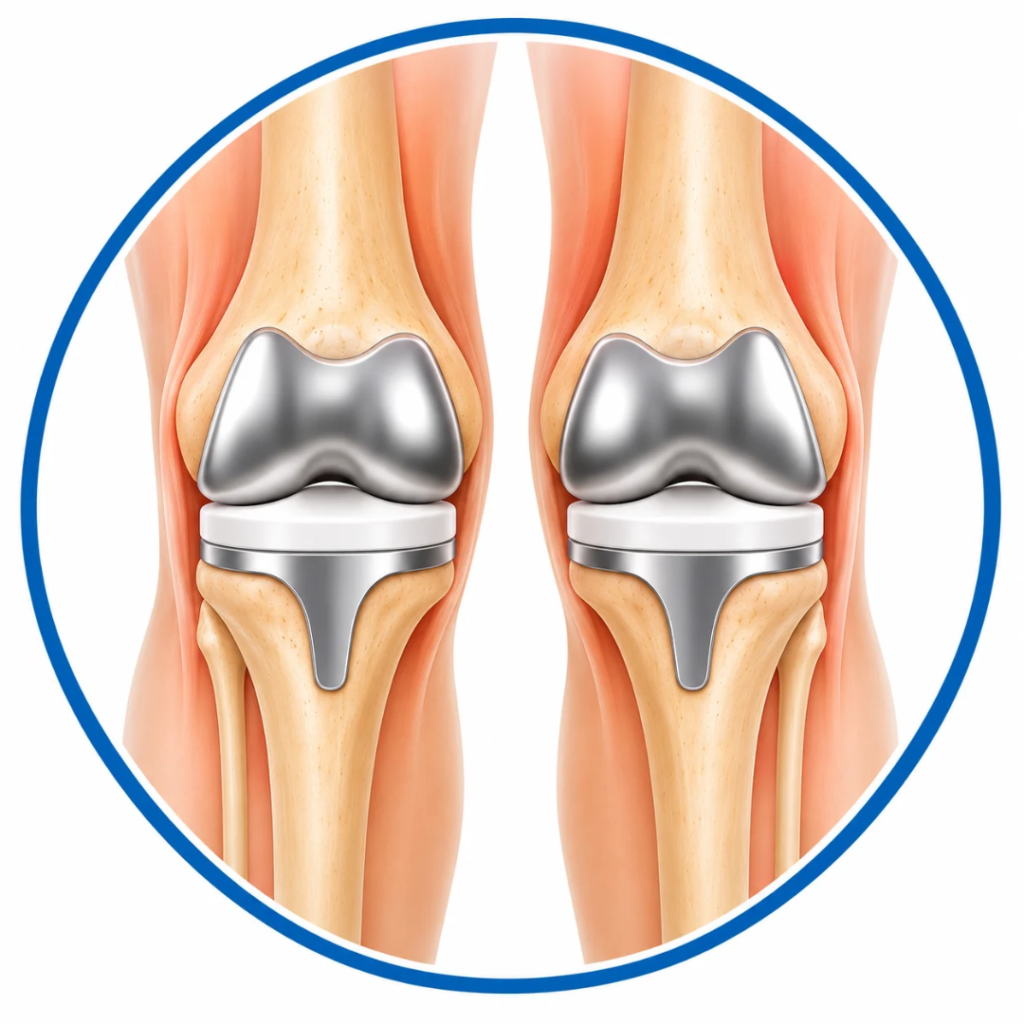
Artificial components are then positioned to recreate the joint surfaces. A plastic spacer is placed between the components to allow smooth movement.
The surgeon checks the alignment, movement and stability of the knee before closing the incision.
After the Surgery
Following surgery, the patient is monitored by the medical team.
Postoperative care may include:
Pain management and wound care.
Monitoring vital signs.
Early assisted movement.
Physiotherapy and rehabilitation.
Guidance on walking and daily activities.
Follow-up appointments to monitor recovery.
The rehabilitation plan is tailored to the patient’s condition and progress.
Recovery After Total Knee Replacement Surgery
Recovery after knee replacement surgery is a gradual process. The duration varies depending on the patient’s age, general health, muscle strength and rehabilitation progress.
First Few Days: Patients are monitored after surgery and may begin assisted walking and basic knee movements with guidance from the physiotherapy team.
First 2–6 Weeks: Physiotherapy focuses on improving knee movement, muscle strength and walking ability.
6–12 Weeks: Many patients experience significant improvements in mobility and daily activities, although recovery varies.
3–6 Months: Continued exercises and rehabilitation help improve strength, flexibility and functional movement.
Complete recovery can take several months, and some patients may require longer rehabilitation.
Following the surgeon’s instructions and attending physiotherapy sessions are important for recovery.
Who Is a Suitable Candidate for Knee Replacement Surgery?
Knee replacement surgery may be considered for patients who have:
Advanced osteoarthritis or rheumatoid arthritis.
Severe and persistent knee pain.
Significant damage to the knee joint.
Difficulty performing everyday activities.
Limited improvement with medication and physiotherapy.
Reduced mobility due to knee joint deterioration.
The decision to undergo surgery depends on the patient’s symptoms, joint condition, overall health and expected benefits.
Who May Need Additional Assessment Before Surgery?
Certain medical conditions may increase surgical risks and require additional evaluation before knee replacement surgery.
These include:
Uncontrolled diabetes.
Active infections.
Significant heart or lung conditions.
Severe obesity.
Poor bone health.
Blood clotting disorders.
Other uncontrolled medical conditions.
These conditions do not automatically rule out surgery. The treating medical team will assess and optimize the patient’s health before deciding whether surgery is appropriate.
Risks and Complications of Knee Replacement Surgery
Like any major surgical procedure, total knee replacement has potential risks and complications.
These may include:
Infection around the surgical wound or implant.
Blood clots in the legs.
Bleeding or swelling.
Persistent pain or stiffness.
Implant loosening or wear over time.
Nerve or blood vessel injury.
Knee instability.
Reduced range of movement.
Proper surgical planning, postoperative monitoring and rehabilitation help manage these risks.
Your orthopedic surgeon will explain the possible complications and precautions before surgery.
Why Choose Kusuma Hospital for Orthopedic Care in Bangalore?
Kusuma Hospital, located in Banashankari, Bangalore, provides healthcare services for patients seeking evaluation and treatment for orthopedic conditions.
Our approach focuses on patient assessment, appropriate treatment planning and recovery support.
Orthopedic consultation and joint evaluation.
Assessment of knee pain and arthritis.
Evaluation for suitable knee replacement procedures.
Surgical care and postoperative monitoring.
Physiotherapy and rehabilitation support.
Diagnostic support, including X-ray and ultrasound facilities.
Multispecialty medical support when required.
Our aim is to help patients make informed decisions about their orthopedic treatment and recovery.
Knee Replacement Surgery in Banashankari, Bangalore
If knee pain is affecting your walking, mobility or everyday activities, timely orthopedic evaluation is important.
Kusuma Hospital in Banashankari, Bangalore, provides orthopedic consultation and treatment guidance for patients experiencing knee pain and joint problems.
Whether you are exploring treatment for osteoarthritis or considering total knee replacement surgery, our team can help you understand the available treatment options.
Book an Orthopedic Consultation at Kusuma Hospital, Banashankari, Bangalore.
Contact our hospital to schedule your appointment.